


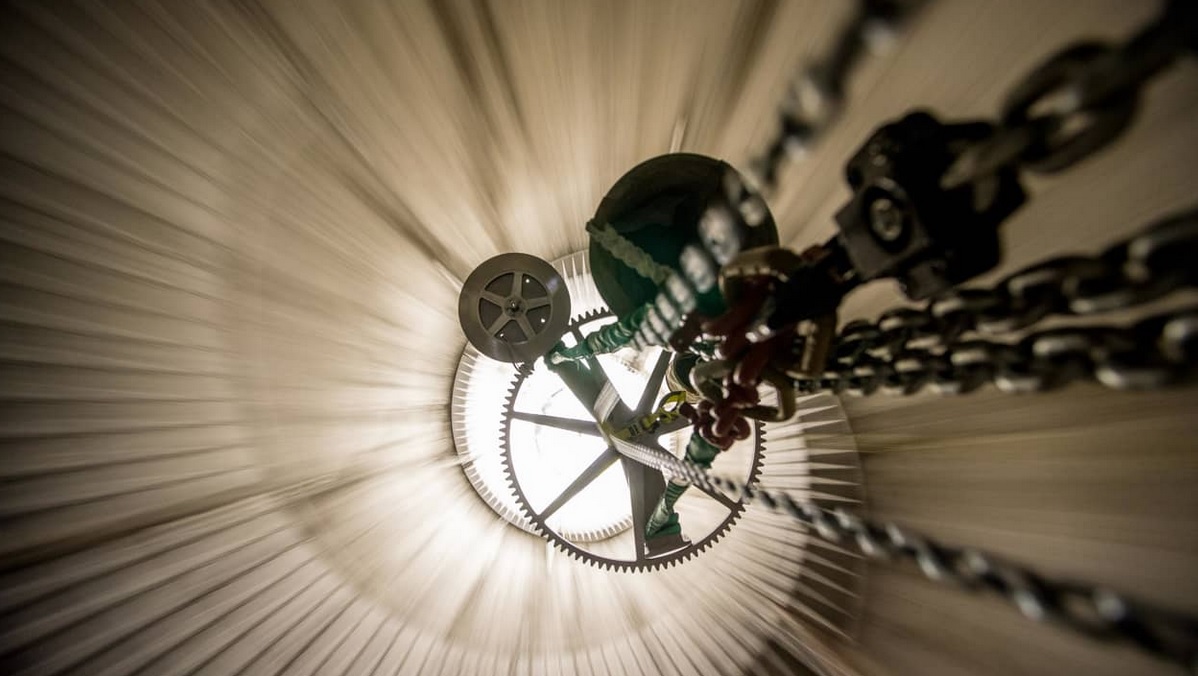
The Clock of the Long Now is a timepiece with a very extensive time-frame. In a time of short-term focus, profits and plans the long-now-clock stands out with a focus on the long-term future; the eternal future. The Long Now Clock is an enormous (monument size) clock with a 10,000 year timeframe that that has been built deep within a mountain. With its multi-millennial focus the mechanical master clock serves as an icon to long term thinking and is a embodiment of time-travel.
The Long Now Foundation
The Long Now Foundation was established in 01996* to develop the Clock and Library projects, as well as to become the seed of a very long-term cultural institution. The goal of the Long Now Foundation is to provide a counterpoint to today’s accelerating culture and help make long-term thinking more common. With their projects they hope to foster responsibility in the framework of the next 10,000 years.
The Long Now term was coined by one of the founding board members, Brian Eno. Upon moving to New York City, Brian found that “here” and “now” meant “this room”and “this five minutes” as opposed to the larger here and longer now that he was used to in England. Long now was his way of expressing that feeeling and ever since he coined the term the foundation has adopted the term as the title of all their efforts trying to stretch out what people consider as now.
The Clock of the Long Now
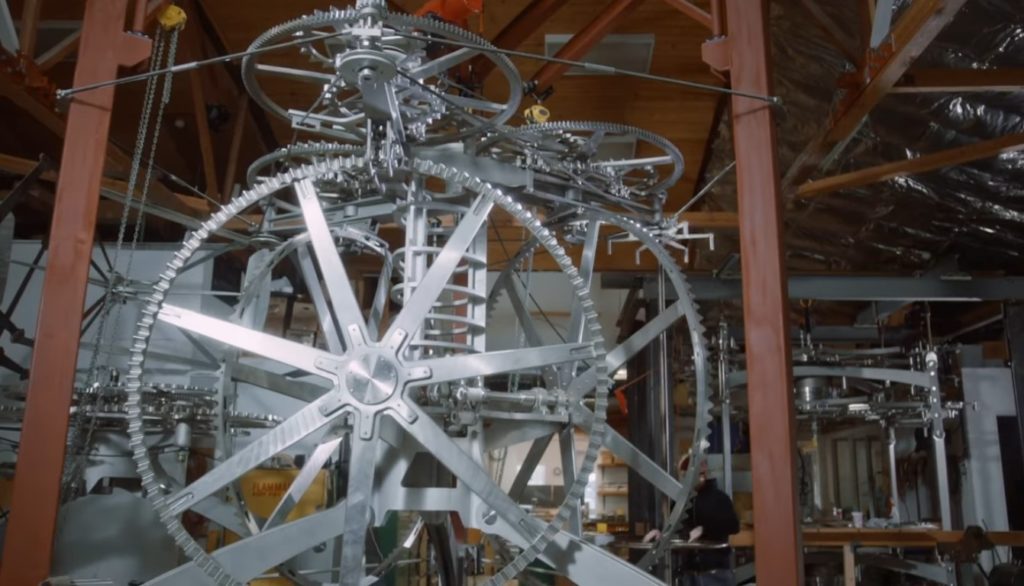
The Clock of the Long Now, also called the 10,000-year clock, is a mechanical clock under construction in Nevada (USA) that is designed to keep time for 10,000 years. But why would anyone build such a slow timepiece?
Civilization is revving itself into a pathologically short attention span. This undeniable trend might be coming from the increasing acceleration of technology, the short-horizon perspective of market-driven economics, the next-election perspective of democracies, or the distractions of personal multi-tasking. Or from all of those combined. Point in case is we need a counter force. Some sort of balancing corrective to the short-sightedness is needed-some mechanism or myth which encourages the long view and the taking of long-term responsibility, where ‘long-term’ is measured at least in centuries. Long Now proposes both a mechanism and a myth. It began with an observation and idea by computer scientist Daniel Hillis :
“When I was a child, people used to talk about what would happen by the year 2000. For the next thirty years they kept talking about what would happen by the year 2000, and now no one mentions a future date at all. The future has been shrinking by one year per year for my entire life. I think it is time for us to start a long-term project that gets people thinking past the mental barrier of an ever-shortening future. I would like to propose a large (think Stonehenge) mechanical clock, powered by seasonal temperature changes. It ticks once a year, bongs once a century, and the cuckoo comes out every millennium.”

This clock, became the Long Now Clock. The goal was to build it sufficiently impressive and well-engineered in order to embody deep time for people. The vision was for it to be charismatic to visit, interesting to think about, and famous enough to become iconic in the public discourse. Ideally, it would do for thinking about time what the photographs of Earth from space have done for thinking about the environment. Such icons reframe the way people think.
Hillis, who developed the “massive parallel” architecture of the current generation of supercomputers, devised the mechanical design of the Clock and is currently building the monument scale version of the Clock in the Sierra Diablo range of West Texas near the town of Van Horn. The first Clock prototype is currently on display at the London Science Museum and others are at the headquarters of Long Now in San Francisco. The Clock’s works consist of a specially designed gear system that has precision equal to one day in 20,000 years, and it self-corrects by “phase-locking” to the noon Sun.
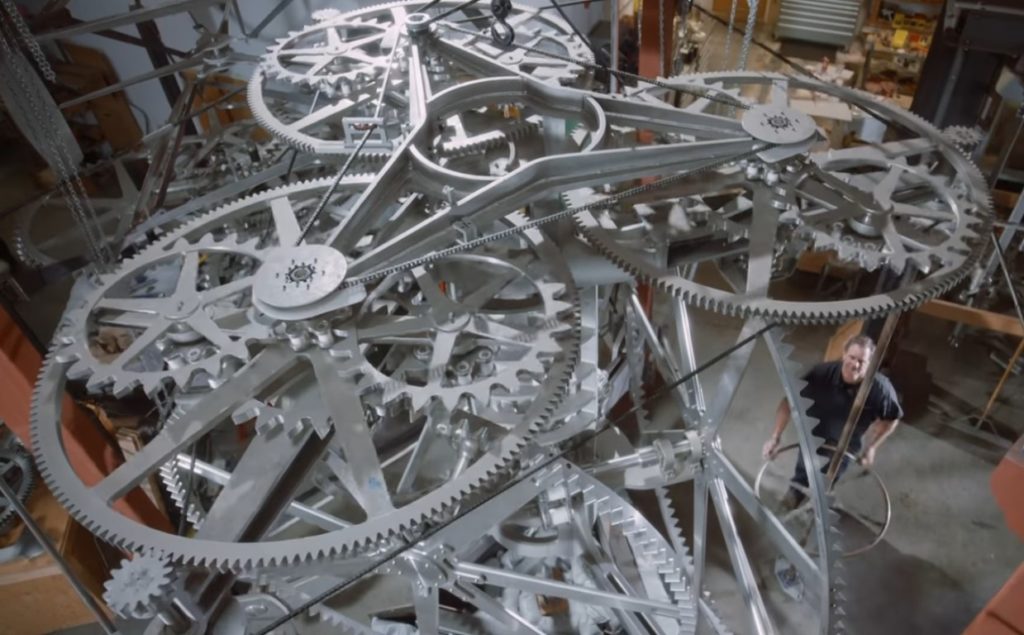
The Clock of the Long Now documentary is a portrait of Danny Hillis and his brilliant team of inventors, futurists, and engineers as they build The 10,000 Year Clock—a grand, Stone Henge-like monolith, being constructed in a mountain in West Texas.
The Long Now Library
Long Now wasn’t done with only a clock. They also wanted to capture long-term knowledge and therefore added a “Long Now Library”. The Long Now Library would be a long-term source of content to go along with the long-term clock to provide context to future generation. It would become a library of the deep future, for the deep future. In a sense every library is part of the 10,000-year Library, so Long Now is developing tools (such as the Rosetta Disk , The Long Viewer and the Long Server ) that may provide inspiration and utility to the whole community of librarians and archivists. The Long Bets project – whose purpose is improving the quality of long-term thinking by making predictions accountable – is also Library-related.
What are your long-term travel plans…?
The point of the long-now project is to explore whatever may be helpful for thinking, understanding, and acting responsibly over long periods of time. Makes sense to apply some long-term thinking to our lives starting with the question: “What are your long-term travel plans and goals?”
