


The penis festival has more than meets the eye. Dominated by massive phallus and penis symbols and contraptions one gets the impression of a highly erotic and sexual festival. Nothing could be further from the truth as the Japan penis festival is actually a age old and traditional Shinto celebration of fertility.


Japan Penis Festival Kanamara Matsuri
Every now and then something very bizarre from Japan pops up in the news. This time, it happens to be a bright pink penis carried around the streets of a town near Tokyo! It turns out this bizarre spectable is part of the annual Kanamara Matsuri Festival.
The phallus, as the central theme of the event, is reflected in illustrations, candy, carved vegetables, decorations, and a mikoshi parade which is clearly visible in the video below.
It reminds us of other bizar festivals and events like the nutscaping travel photography trend where men take travel snaps of their balls, food fight festivals and other naked trips around the world!

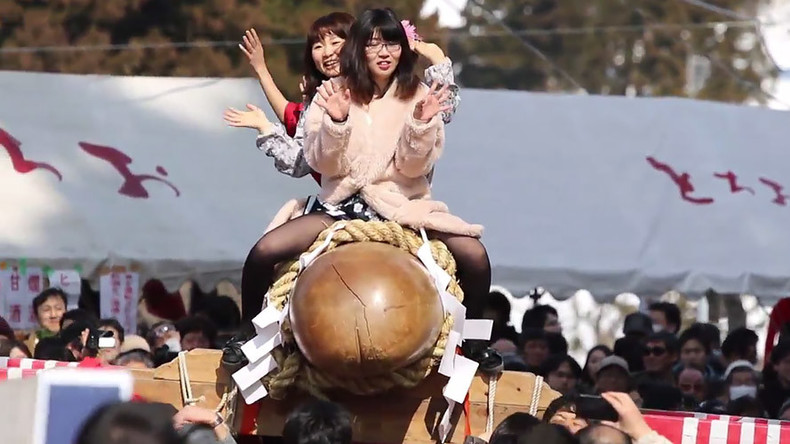
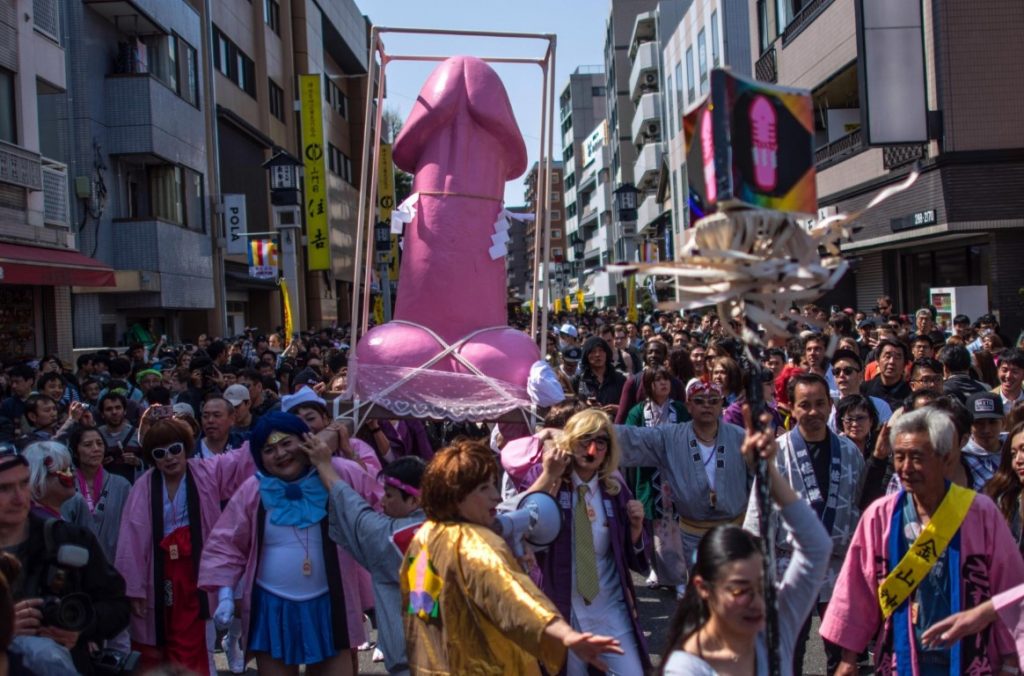

The eye-catching festival is often dubbed the “Penis” festival or the “Utamaro Festival” and it has a long history going back more than 200 years! The Kanamara Matsuri festival can be traced back to the Kanamara shrine, a temple dedicated to both fertility and a place for prayer for women afflicted by sexual diseases. It’s a place women go to pray to get pregnant and for a healthy child. Those who have been unfortunate to contract a STD have been coming here for centuries.

The penis legend
The Kanamara Matsuri is centered on a local penis-venerating shrine. The legend being that a jealous sharp-toothed demon hid inside the vagina of a young woman the demon fell in love with and bit off penises of two young men on their wedding nights. After that the woman sought help from a blacksmith, who fashioned an iron phallus to break the demon’s teeth, which led to the enshrinement of the item.
The Kanayama Shrine was popular among prostitutes who wished to pray for protection from sexually transmitted infections. It is also said the shrine offers divine protections for business prosperity, and for the clan’s prosperity; and for easy delivery, marriage, and married-couple harmony.
The festival started in 1969. Today, the festival has become something of a tourist attraction and is used to raise money for HIV research.
